



Formyl Peptide Receptor (FPR)
Formyl peptide receptors (FPRs) are a group of G protein-coupled chemoattractant receptors, including FPR1, FPR2 and FPR3. FPR1 and FPR2 are expressed in both monocytes and neutrophils, while FPR3 is found in monocytes but not neutrophils. Besides myeloid cells, FPR1 is expressed in astrocytes, microglial cells, hepatocytes and immature dendritic cells. FPR2 shows an even wider distribution pattern than FPR1 and is expressed in a variety of non-myeloid cells including astrocytoma cells, epithelial cells, hepatocytes, microvascular endothelial cells, neuroblastoma cells, in addition to phagocytic leukocytes. FPRs are classified as Pathogen Recognition Receptors (PRRs) located on immune cells that play a key role in innate immunity due to their ability to recognize both, pathogen associated and damage-associated molecular patterns (PAMPs and DAMPs). FPRs participate not only in host defense and regulation of inflammatory response but also in the migration, proliferation, superoxide production and in several physio-pathological processes due to their unique binding properties and interaction with structurally diverse ligands.
All Product Categories
-
Formyl Peptide Receptor (FPR) Inhibitors
(7)
View all products
-
Formyl Peptide Receptor (FPR) Agonists
(15)
View all products
-
Formyl Peptide Receptor (FPR) Antagonists
(10)
View all products
-
Formyl Peptide Receptor (FPR) Activators
(4)
View all products
-
Formyl Peptide Receptor (FPR) Ligand
(1)
View all products
-
Formyl Peptide Receptor (FPR) Related Products (58)
Related Products (58)

-
Isomaltulose monohydrate
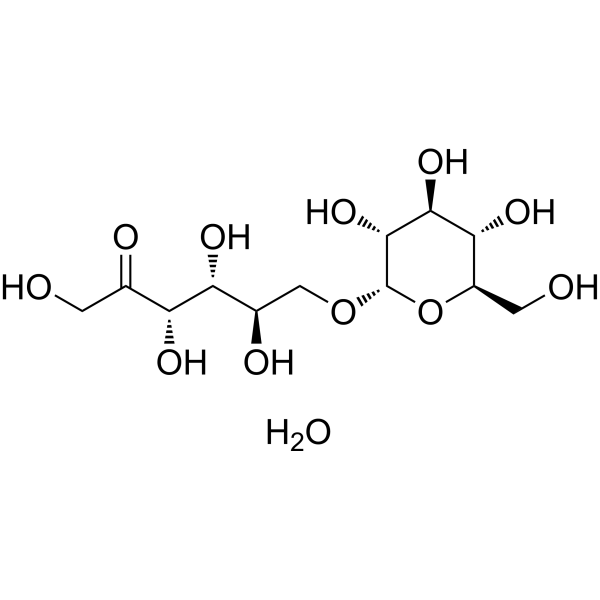 0 ImagesCat. No.: HY-W745090CAS No.: 58024-13-8Isomaltulose monohydrate is a fMLP inhibitor and also inhibits Src kinase, ERK1/2, p38 and AKT phosphorylation signals in immune regulation. Isomaltulose monohydrate can interfere with the interaction between the βγ subunit of the fMLP receptor Gi protein and its downstream molecules, thereby inhibiting fMLP-induced respiratory burst. Isomaltulose monohydrate inhibits fMLP (0.1 μM)-induced superoxide anion production (IC50: 1.98 μM) , cathepsin G release (IC< sub>50: 2.76 μM) and chemotaxis. Isomaltulose monohydrate can improve excessive activation of neutrophils and reduce inflammation or tissue damage. A series of derivatives of Isomaltulose monohydrate are found to have inhibitory effects on FSGS-related TRPC6 functional mutants.
-
MMK1 TFA
 0 ImagesCat. No.: HY-P1117AMMK1 TFA is a potent and selective human formyl peptide receptor like-1 (FPRL-1/FPR2) agonist with EC50s of <2 nM and >10000 nM for FPRL-1 and FPR1, respectively. MMK1 TFA is a potent chemotactic and calcium-mobilizing agonist. MMK1 TFA potently activates phagocytic leukocytes and enhances Pertussis Toxin-sensitive production by human monocytes of proinflammatory cytokines IL-1b and IL-6. MMK1 TFA exerts anxiolytic-like activity.
-
N-Formyl-Nle-Leu-Phe-Nle-Tyr-Lys TFA
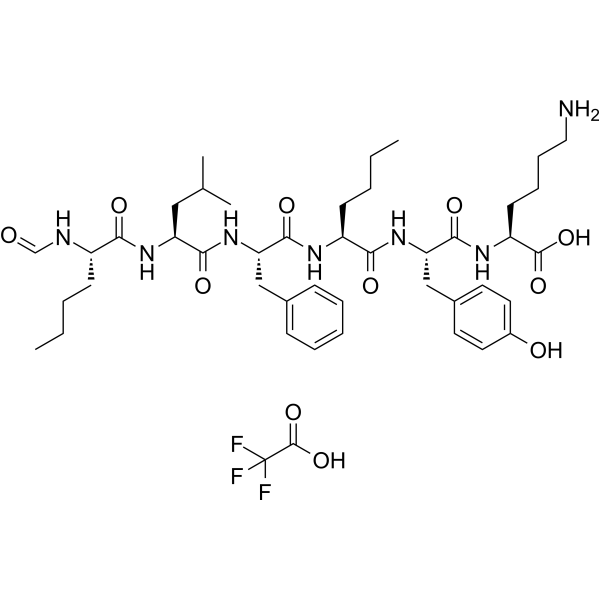 0 ImagesCat. No.: HY-P1591ACAS No.: 2918767-97-0Synonyms: For-Nle-Leu-Phe-Nle-Tyr-Lys-OH TFAN-Formyl-Nle-Leu-Phe-Nle-Tyr-Lys TFA (For-Nle-Leu-Phe-Nle-Tyr-Lys-OH TFA) is a formyl peptide receptor (FPR) agonist.
-
FPR2 agonist 4
 0 ImagesCat. No.: HY-159583CAS No.: 2101188-49-0FPR2 agonist 4 (compound 20) is a selective agonist of FPR2 with an EC50 of 0.2 nM.
-
FPR1 antagonist 2
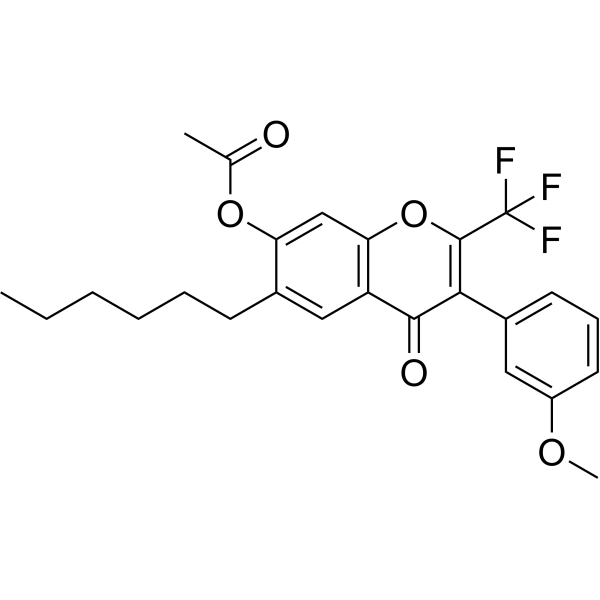 0 ImagesCat. No.: HY-156294FPR1 antagonist 2 (compound 25b) is a formyl peptide receptor 1 (FPR1) antagonist with an IC50 of 70 nM. FPR1 antagonist 2 inhibits cell growth through a combined effect on cell proliferation and apoptosis and reduces cell migration, while inducing an increase in angiogenesis.
-
N-19004
 0 ImagesCat. No.: HY-178919CAS No.: 2996841-28-0N-19004 is a FPR1 antagonist. N-19004 shows broad-spectrum antibacterial effects against a variety of pathogens. N-19004 exhibits significant retinal protective effects in the rd10 mouse model of retinitis pigmentosa (RP). N-19004 can attenuate retinal dysfunction, mitigate rod and cone degeneration, and reduce immune cell activation, gliosis, inflammation, oxidative stress, and apoptosis. N-19004 can reduce the size of laser-induced choroidal lesions and promote edema absorption through dual anti-inflammatory and anti-angiogenic effects. N-19004 can be used for the research of retinal degenerative diseases such as retinitis pigmentosa.
-
Ac2-26 (mouse)
 0 ImagesCat. No.: HY-P11491CAS No.: 164466-66-4Ac2-26 (mouse) is the N-terminal active peptide of Annexin A1 (AnxA1; AxA1). Ac2-26 (mouse) regulates the inflammatory response by modulating the formyl peptide receptor (FPR) signaling pathway. Ac2-26 (mouse) can promote the release of chemokines and inhibit the production of ROS. Ac2-26 (mouse) can be used for the research of inflammation, such as rheumatoid arthritis.
-
FPR2 agonist 5
 0 ImagesCat. No.: HY-178144FPR2 agonist 5 is a selective Formyl Peptide Receptor 2 (FPR2) agonist. FPR2 agonist 5 induces Ca2+ mobilization in FPR2-HL60 transfected cells with an EC50 of 1.2 μM and causes FPR2 desensitization with an IC50 of 0.32 μM. FPR2 agonist 5 exerts neuroprotective effects by mitigating LDH release, NO production, IL-1β, IL-6, IL-33, and IL-10 levels in LPS (HY-D1056)-induced mouse primary microglial cells. FPR2 agonist 5 can be used for the study of neuroinflammatory-related diseases.
-
FPR2/ALXR agonist-1
 0 ImagesCat. No.: HY-183952CAS No.: 300718-24-5FPR2/ALXR agonist-1 is a selective FPR2/ALXR agonist. FPR2/ALXR agonist-1 activates neutrophil superoxide production. FPR2/ALXR agonist-1 can be used for research on inflammatory diseases.
-
WRW4-OH
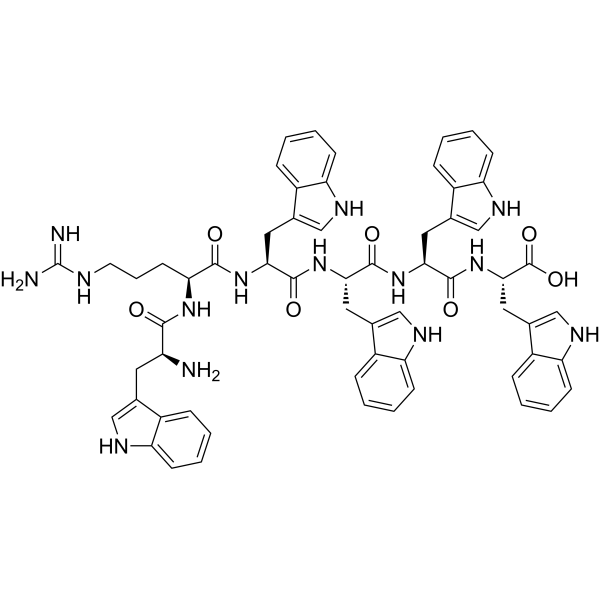 0 ImagesCat. No.: HY-P5469CAS No.: 722541-91-5WRW4-OH is a biological active peptide. (This peptide inhibits binding of one of formyl peptide receptor-like 1 (FPRL1) agonists WKYMVm to its specific receptor. FPRL1 is an important classical chemoattractant receptor that is expressed in phagocytic cells in the peripheral blood and brain. Activation of FPRL1 is closely related to inflammatory responses in the host defense mechanism and neurodegenerative disorders.)
-
WKYMVM-NH2
 0 ImagesCat. No.: HY-P1121CAS No.: 187986-11-4WKYMVM-NH2 is a hexapeptide that activates neutrophils and myeloid cells via the FPRL1 and FPRL2 receptors. It exhibits EC50 values of 2 nM and 80 nM in HL-60-FPRL1 and HL-60-FPRL2 cells, respectively. In HL-60 cells stably expressing FPRL2, WKYMVM-NH₂ induces chemotaxis, with optimal migration observed at concentrations ranging from 10 to 50 nM. It also stimulates superoxide production in neutrophils, with an EC50 of 75 nM. WKYMVM-NH₂ is a useful tool for research in the field of inflammatory diseases.
-
Ac9-25 TFA
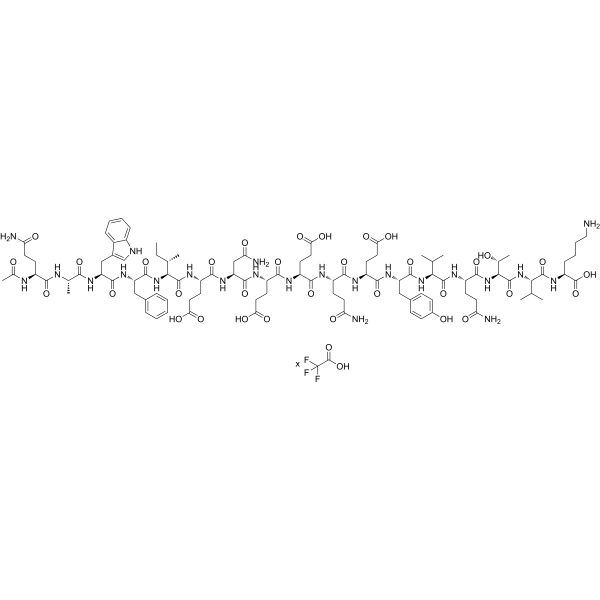 0 ImagesCat. No.: HY-P1118AAc9-25 TFA, a N-terminal peptide of Annexin I, acts as a formyl peptide receptor (FPR) agonist and activates the neutrophil NADPH oxidase through FPR.
-
SHAAGtide
 0 ImagesCat. No.: HY-P10432CAS No.: 510732-22-6SHAAGtide is a FPRL1 activator. SHAAGtide has anti-inflammatory activity, mediates its biological activity via FPR2 and is used to reduce the expression of inflammatory cytokines in mouse models. SHAAGtide can be used in the study of diseases such as lung inflammation and fibrosis.
-
BOC-FlFlF TFA
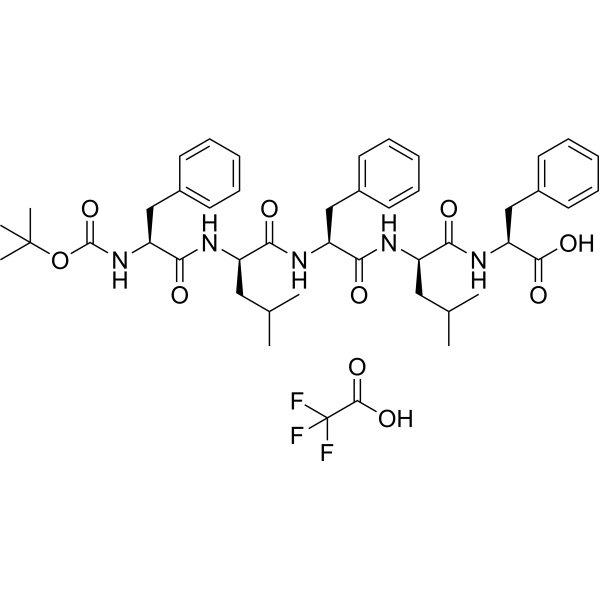 0 ImagesCat. No.: HY-P2355ASynonyms: BOC2 TFA; Boc-Phe-dLeu-Phe-dLeu-Phe TFABOC-FlFlF (TFA) (Boc-Phe-dLeu-Phe-dLeu-Phe (TFA)) is a selective FPR1 antagonist. BOC-FlFlF has an apparent dissociation constant (KD) of 230 nM as determined by the intracellular calcium mobilization assay. BOC-FlFlF can be used for the study of inflammation.
-
BMS-986331
 0 ImagesBMS-986331 is an orally active selective N-Formyl Peptide Receptor 2 (FPR2) agonist with an EC50 of 0.5 nM in humans and 1 nM in rats. BMS-986331 activates Gαi2, GαoA, Gα12, Gα13 signaling pathways, recruits β-arrestin1 and β-arrestin2, and inhibits downstream cAMP. BMS-986331 induces the expression and release of the pro-resolution cytokine IL-10. BMS-986331 improves cardiac structure and function in a rat model of heart failure induced by permanent coronary artery occlusion. BMS-986331 can be used for the research of heart failure.
-
HCH6-1 (Standard)
 0 ImagesCat. No.: HY-101283RCAS No.: 1435265-06-7HCH6-1 (Standard) is the analytical standard of HCH6-1 (HY-101283). This product is intended for research and analytical applications. HCH6-1 is a potent and competitive dipeptide antagonist of Formyl peptide receptor 1 (FPR1). HCH6-1 inhibits chemotaxis, superoxide anion generation, and elastase release in human neutrophils specifically activated by fMLF (an FPR1 agonist). HCH6-1 has protective effects against acute lung injury (ALI) in vivo and can be used for the research of FPR1-involved inflammatory lung diseases.
-
ALXR-agonist-6
 0 ImagesCat. No.: HY-W288025CAS No.: 325850-26-8ALXR-agonist-6 (compound 36) is an ALXR agonist with the EC50 values of >10 μM for Ca2+ flux in CHO recombinant cells co-expressing hFPRL1.
-
FPR-A14 (Standard)
 0 ImagesCat. No.: HY-103472RCAS No.: 329691-12-5FPR-A14 (Standard) is the analytical standard of FPR-A14 (HY-103472). This product is intended for research and analytical applications. FPR-A14 is a potent formyl peptide receptor (FPR) agonist. FPR-A14 is a potent activator of neutrophil Ca2+ mobilization and chemotaxis with EC50s of 630 nM and 42 nM, respectively. FPR-A14 induces cell differentiation.



